The Road Ahead Isn't Wet: Decoding America's Most Common Mirage
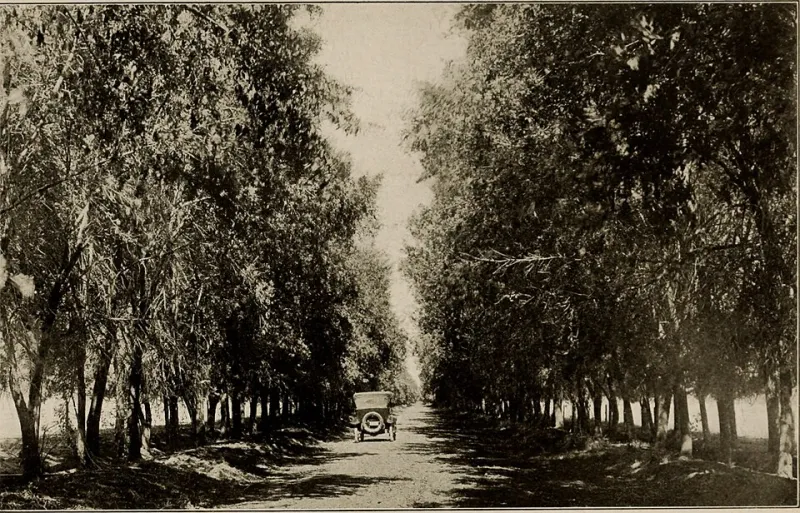
Photo: Internet Archive Book Images, No restrictions, via Wikimedia Commons
Picture this: it's 95 degrees in July, you're cruising down I-70 through Kansas, and the asphalt a quarter mile ahead is glistening wet. A puddle. Maybe a whole stretch of standing water, reflecting the sky. Then, as you get closer, it evaporates — not from the road, but from existence. There was never a drop out there.
You've just witnessed a mirage. Not a desert-camel hallucination from cartoons, but a real, repeatable, beautifully ordinary piece of physics that plays out on every sun-baked highway in America.
Light Has a Need for Speed (and Medium)
Light travels at about 186,000 miles per second in a vacuum, but it slows down slightly when it passes through air — and it slows down differently depending on the air's temperature and density. Cooler air is denser and slows light a bit more. Hot air is thinner and lets light move a touch faster.
On a scorching afternoon, the pavement absorbs sunlight all day and can hit 140 degrees or more. The air touching the road becomes a thin layer of superheated gas, with cooler air stacked above it. So instead of a uniform atmosphere, you're looking through a layered cake of air at different densities.
When light from the sky hits that hot layer at a shallow angle, it bends upward — the technical term is refraction — like a basketball skipped off a gym floor. Your eyes, which assume light always travels in straight lines, trace that bent ray backward and conclude the sky is sitting on the road ahead.
That's the "water." It's a patch of blue sky, delivered to your eyes from the wrong direction.
Why the Puddle Runs From You
The mirage depends entirely on the angle at which light reaches your eyes. From a quarter mile away, the geometry works: rays from the sky skip off the hot layer and arrive as if reflected off a mirror-flat puddle. But as you close the distance, the angles change. The skip zone slides farther down the road, always keeping its distance like a mirage-shaped carrot on a stick.
This is why you can never drive to the water. The shimmer isn't a place — it's a relationship between you, the sun, and the air.
The Floating City: Mirages Go Vertical
Puddles are only the beginning. On especially hot days — think Phoenix in August, or a heat wave gripping St. Louis — you can catch superior mirages, where the stacking of air runs in reverse. Cold, dense air near the surface (say, over the Great Lakes or San Francisco Bay) bends light downward, causing distant objects to appear elevated, stretched, or hovering above the horizon.
This is the famous Fata Morgana effect: buildings and islands that seem to float in midair, stacked and warped like reflections in a funhouse mirror. Sailors on Lake Michigan have reported Chicago's skyline looming impossibly high over the water on cold mornings. Nothing supernatural — just refraction with the temperature gradient flipped.
What the Shimmer Is Actually Telling You
Once you know what to look for, heat shimmer becomes a surprisingly useful instrument:
- A thermometer you can see. Visible waviness above a road, a parking lot, or a rooftop means surface temps are well past 120°F. No shimmer, no extreme heat.
- A distance gauge. The sharper the distortion, the longer the light path through turbulent air. That's why distant cars seem to wobble while the steering wheel in your hands doesn't.
- A forecast hint. Strong shimmer on a morning drive suggests clear skies and strong solar heating — conditions ripe for afternoon thunderstorms in much of the country.
Try This From the Driver's Seat
Next time you're a passenger on a hot day, look at the road far ahead, then focus on the stretch just past a nearby car. The distant pavement shimmers; the near pavement doesn't. You're watching the minimum angle for refraction in action.
Or park safely and crouch down low — mirages strengthen when your line of sight skims the hot surface at a grazing angle. A camera held inches above summer asphalt will turn an ordinary suburban street into a lake of sky.
The highway isn't lying to you, exactly. It's just translating light through hot air, and the translation is gorgeous.