Where Water Puts on a Light Show: A Field Guide to Nature's Optics Labs
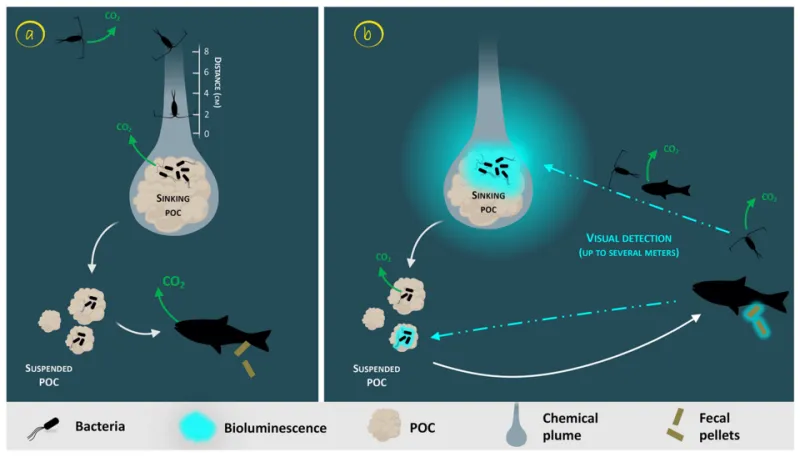
Photo: Lisa Tanet, Séverine Martini, Laurie Casalot and Christian Tamburini, CC BY-SA 4.0, via Wikimedia Commons
Long before humans ground lenses or split beams with prisms, water was already doing advanced optics — bending light, focusing it, scattering it, even generating it. The best part? You don't need a lab coat to watch. You need a road map, decent timing, and a little patience.
Here are five places in the United States where water and light collaborate at a level any optics researcher would envy.
1. Sun Dogs: Ice Crystals as Prisms
On frigid, clear mornings, look near the rising sun. Flanking it on both sides, you might spot two faint patches of rainbow light — phantom suns hanging at the same height, about 22 degrees to either side.
These are sun dogs (parhelia, if you want the Latin), and they're made by hexagonal ice crystals drifting in high, thin cirrus clouds. Each crystal acts like a tiny prism, bending sunlight a minimum of 22 degrees. Millions of crystals orient themselves randomly, but the geometry concentrates brightness exactly at those two flanking spots.
Where and when: The upper Midwest delivers reliably — North Dakota, Minnesota, Wisconsin, and Michigan on bright winter mornings, especially after a fresh cold snap. Farmers' Almanac devotees have long read sun dogs as a sign of incoming snow, and there's real physics behind the folklore: the cirrus clouds that make them often arrive ahead of a storm system.
2. Underwater Caustics: The Dancing Net of Light
Shallow a pool of sunlight into moving water and you get caustics — those shifting, branching webs of bright lines on the bottom. Every ripple on the surface acts as a wobbling lens, concentrating sunlight into bright filaments and starving other spots entirely.
This is the same focusing principle behind a magnifying glass burning paper, just distributed across thousands of ever-changing water lenses. It's also why swimming pool floors look like they're alive.
Where and when: Anywhere with clear, shallow, sunlit water. The tide pools of La Jolla Cove in California, the gin-clear shallows of the Florida Keys, or — honestly — the neighborhood pool at 2 p.m. Once you see the pattern, you'll spot it everywhere, including in your morning coffee near a sunny window.
3. Bioluminescent Waves: Light Made From Water
Most phenomena on this list involve water manipulating light. This one involves water creating it. Certain single-celled plankton — dinoflagellates — produce a chemical flash of blue-green light when the water around them is disturbed. A breaking wave, a paddle stroke, a skipped stone: each trigger sets off millions of microscopic burglar alarms.
Where and when: Southern California is the marquee destination. Mosquito Bay on Vieques (a short flight from the mainland) holds the Guinness record for brightness, but stateside, Tomales Bay north of San Francisco and San Diego's coastline deliver memorable displays, typically in late summer and early fall. Warm, calm nights after warm days are your best bet. Paddle quietly — the glow fades where you churn, then relights in your wake like a signature.
4. Light Pillars: Frozen Lakes as Mirror Mazes
On brutally cold, nearly windless nights, flat ice crystals can hang suspended in the air like a swarm of tiny mirrors. Light from streetlamps, car headlights, or the moon bounces off these horizontal plates and streams back down toward your eyes in vertical columns — light pillars that appear to shoot straight up from every light source in town.
Where and when: Anywhere that combines serious cold and bright lights. International Falls, Minnesota; Fairbanks, Alaska; the Michigan Upper Peninsula on a January night when temps drop below zero. Frozen lakes add a bonus: the ice surface itself reflects the pillars, doubling the show. Look for them within a few hours of sunset, when artificial lights are bright and the air is dead calm.
5. Glory Rings: Your Own Private Halo
Hike above a cloud layer — on Mount Rainier, Haleakalā in Maui, or almost any peak in the Appalachians with fog below — and look down at the mist when the sun is behind you. A ring of soft, pastel-colored light may appear, centered precisely on the shadow of your own head.
This is a glory, and unlike a rainbow, its rings are tiny and centered on the observer. Water droplets in the cloud scatter sunlight in interference patterns that only line up when viewed exactly opposite the sun. Move, and the glory moves with you. Your hiking partner sees their own ring, not yours.
Airline passengers get a bonus version: glories ring the airplane's shadow on clouds below, visible from the window seat on many flights.
Your Optics Bucket List, Ranked by Effort
- Easiest: Caustics. Sunlight and a puddle. Done.
- Moderate: Sun dogs and light pillars — weather-dependent, but predictable if you watch forecasts.
- Commitment: Bioluminescence — book a guided night paddle for the best odds.
- Worth the hike: Glories — any summit above a cloud deck on a sunny morning.
Every one of these is a reminder that the fanciest optics lab on Earth was already operating before we showed up. All water asks is that you show up and look.