Tea, Milk, or Glacial Blue: How to Read a River Like a Scientist
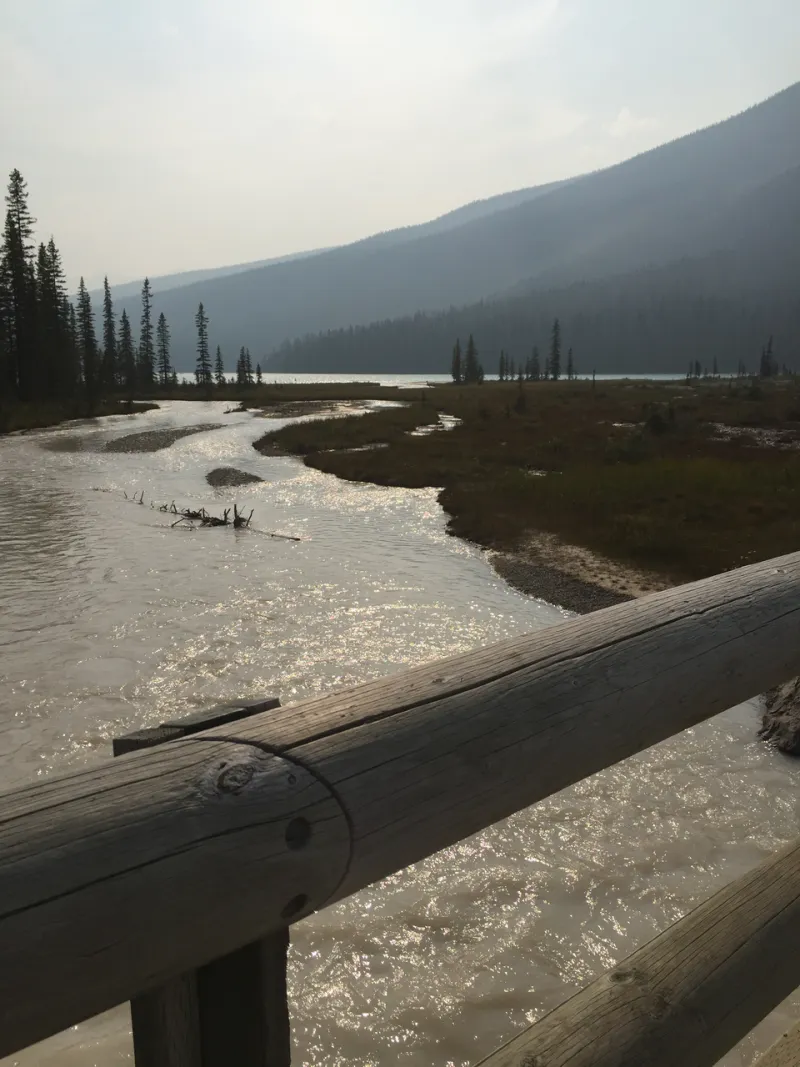
Photo: VoxDeVaux, CC BY-SA 4.0, via Wikimedia Commons
Stand on the bank of almost any creek, river, or lake in America and you're looking at a lab report. The color of the water — that particular shade of chocolate, rust, olive, or impossible turquoise — is a summary of everything happening upstream. It's chemistry, geology, and light physics rolled into one glance.
And the best part? You don't need a single instrument to start reading it. Your eyes, plus a camera phone, can decode your own watershed.
First, Why Is Water Any Color at All?
Pure water is famously, faintly blue. That's not a trick of the sky — water molecules genuinely absorb longer wavelengths of light (reds and oranges) slightly more than blues, so a deep column of clean water bounces blue back at you. It's the same reason a swimming pool looks blue even indoors.
But most natural water isn't pure. It's carrying cargo, and that cargo falls into two big categories:
Dissolved stuff. Molecules small enough to be truly in the water. In much of the eastern US, especially the pine-and-hardwood country of the Southeast, rainwater leaches tannins from decaying leaves and needles. The result: water stained like steeped tea. Think of the blackwater rivers of the Carolinas and Georgia — the Edisto, the Suwannee — which run the color of sweet tea over white sand. Nothing is wrong with them. They're just brewing constantly.
Suspended stuff. Particles fine enough to drift with the current — clay, silt, fine organic matter. These particles scatter light in every direction, and scattering is what your eye reads as murk. Clay-rich water scatters green and yellow wavelengths efficiently, which is why a muddy Midwestern river after a spring storm looks the color of café au lait. The Mississippi and its tributaries are the textbook case: they drain some of the finest-grained glacial and loess soils on the continent.
The Glacial Exception: Why Turquoise Is a Signature
Some of the most startling water colors in America — the milky turquoise of Glacier National Park's Lake McDonald, the electric blue-green of Wyoming's glacial lakes — come from a very specific kind of particle.
Glaciers grind bedrock into a fine powder called rock flour. These particles are so small they stay suspended almost indefinitely, and so abundant that they dominate how light moves through the water. Rock flour scatters the shorter blue-green wavelengths preferentially, while absorbing others — producing that saturated, almost artificial-looking color that photographs can barely capture.
Here's the key insight: turquoise water is a geological fingerprint. If you see it, a glacier — active or recently melted — is grinding rock somewhere upstream. It's a color you literally cannot get from ordinary topsoil.
A Quick Field Guide to Water Colors
- Tea-brown to near-black: Dissolved tannins. Forested, acidic watersheds, often with peaty or sandy soils. Common in the Southeast, Pine Barrens of New Jersey, and northern lake country.
- Muddy tan or brick-red: Heavy suspended sediment, often clay or iron-rich soil. Look for recent rain, construction, eroding banks, or agricultural fields upstream.
- Green (pea to emerald): Usually algae or phytoplankton — a nutrient story. Fertilizer runoff, septic leakage, or warm stagnant conditions. Worth paying attention to; a bright green lake in August may be having a bloom.
- Milky turquoise or gray-blue: Glacial rock flour. The watershed reaches into high, icy country.
- Clear with a blue cast: Low nutrients, low particles, often spring-fed or cold. Think Lake Tahoe or a Ozark spring.
Your Turn: The One-Photo Watershed Audit
Here's a reader activity that works anywhere in the country:
- Pick your waterway. A creek, pond, or river you can safely reach. Same spot, if possible.
- Photograph it twice. Once during dry weather, once within 24 hours after a decent rain. Fill the frame with water, not sky — glare off the surface will lie to you.
- Decode the pair. If the water barely changed color after rain, the stream is probably fed by groundwater or buffered by vegetation. If it went from clear to chocolate overnight, you've just watched sediment mobilize — bare soil somewhere upstream took a hit.
- Look for the story. Tan after rain? Check for farm fields or construction sites. Persistent green? Nutrients are hanging around even in dry weather. Tea-colored year-round? You live in a forested watershed doing exactly what forested watersheds do.
Over a season, your two photos become a dozen, and you'll have built something scientists genuinely use: a visual record of how your watershed responds to weather. The USGS does the same thing with turbidity sensors that cost thousands of dollars. Your version is free and fits in your pocket.
The Color Is a Conversation
None of these colors are inherently good or bad. A silty river isn't dirty — it's doing what rivers have always done, moving the continent slowly downhill. But a change in color is always worth noticing, because it means something upstream changed: a plow, a storm, a thaw, a bloom.
Light is the messenger. The sun's photons dive into the water, and whatever the water carries decides which wavelengths come back out. Learn to read the reply, and every stream you pass becomes a running report on the land that feeds it.