The Pipe in Your Wall That Forgets the Rules: Hot Water, Cold Snap, and Physics' Most Stubborn Argument
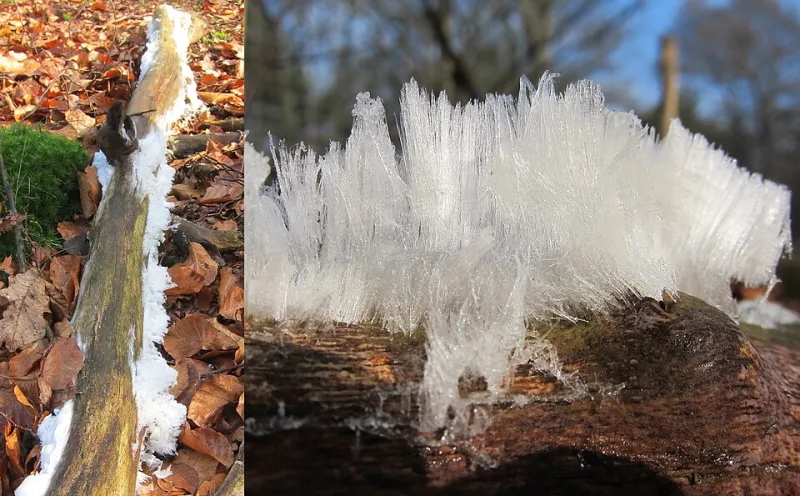
Photo: Henk Monster, CC BY 3.0, via Wikimedia Commons
Somewhere in Minnesota right now, a plumber is telling a homeowner the same thing plumbers have said for generations: if you're worried about a burst pipe during the cold snap, it's the hot water line you should check first.
It sounds like a joke. Hot water has to pass through cold on its way to freezing, so how could it ever beat cold water to the punch? And yet the claim has a name, a history, a stack of published papers, and — most tellingly — a whole lot of unresolved arguments. Welcome to the Mpemba effect, physics' most uncomfortable houseguest.
A Kid, an Ice Cream Mix, and a Question Nobody Wanted
The story starts in 1963, in a Tanzanian classroom, with a student named Erasto Mpemba. While making ice cream from a heated mix, he noticed that his warm batch froze faster than his classmates' cooler ones. When he asked his physics teacher why, he was reportedly laughed at. Years later, Mpemba raised the question again — this time to a visiting physicist, Denis Osborne, who took it seriously enough to test it. The two published a paper in 1969, and the effect has carried Mpemba's name ever since.
Here's the uncomfortable part: more than half a century later, scientists still haven't settled whether it's real, why it happens, or under what conditions. In 2016, a team of researchers ran a large, careful study and concluded that the effect was so small and so dependent on measurement choices that it probably wasn't worth the name. Other researchers have found the opposite. Both camps have good equipment and good manners. Both are annoyed.
The Usual Suspects
If hot water really can outpace cold water to ice, what could possibly be going on? A few candidates come up again and again:
Evaporation. Hot water evaporates faster, and evaporation removes both mass and heat. Less water to freeze means less time to freeze it. This is the most boring explanation, which in science usually makes it the most likely.
Convection. Warm water circulates. The hot water at the top of a container keeps pumping heat to the cold air above, while a container of uniformly cold water just sits there, thermally sullen. Some physicists think this stirring effect does real work.
Dissolved gases. Heating water drives out dissolved air, and some researchers suspect that degassed water freezes with slightly less resistance.
Frost melting. In freezer experiments, a warm container can melt the frost beneath it, improving contact with the cold shelf. A cold container sits on insulating frost. The hot water wins partly because it clears its own path.
Notice what's happening: none of these require water to violate any laws. TheMpemba effect, if it exists, isn't one phenomenon — it's a pile of small, ordinary effects that occasionally stack up in the right direction.
Back to the Pipe in the Wall
So what does any of this have to do with your plumbing? Possibly quite a lot, though not for mystical reasons.
Hot water lines in American homes are often the neglected ones. They're used less frequently, the water in them sits still longer, and in some layouts they run through slightly different routes through the house. There's also scale and sediment: water heaters accumulate minerals over the years, and hot water carries more of them. None of this is the Mpemba effect in its pure form — but it does mean that the folk wisdom "check the hot line first" isn't necessarily crazy, even if the reason isn't the one people think.
The more useful lesson is about water itself. Water is famously weird. It expands when it freezes, which is why a burst pipe splits along its length instead of just clogging. It holds heat stubbornly, which is why lakes cool slowly and why coastal cities have milder winters. And its behavior near freezing is tangled enough that small changes in conditions — a draft, a bit of scale, a difference in dissolved air — can shift outcomes in ways that feel like contradictions.
What to Actually Do About It
The Mpemba debate is a genuinely fun scientific argument. Your pipes are not a place to run experiments. So, practically:
- Insulate pipes in unheated spaces — crawl spaces, garages, exterior walls.
- On the coldest nights, let a faucet drip. Moving water is much harder to freeze than standing water, which is the same reason rivers ice over after ponds.
- Open cabinet doors under sinks on outside walls so warm room air can reach the plumbing.
- Know where your shutoff valve is before the cold snap, not during it.
The Best Kind of Unsolved Problem
There's something fitting about the fact that the Mpemba effect is still contested. A curious kid asked an inconvenient question, an adult took it seriously, and sixty years later the answer is still "it's complicated." That's not a failure of science — that's science working exactly as intended, refusing to accept a tidy story that the evidence doesn't fully support.
So the next time your hot water line freezes before the cold one, you can take a small amount of comfort: you're not experiencing a miracle or a malfunction. You're standing in the middle of one of physics' longest-running arguments, holding a wrench.